
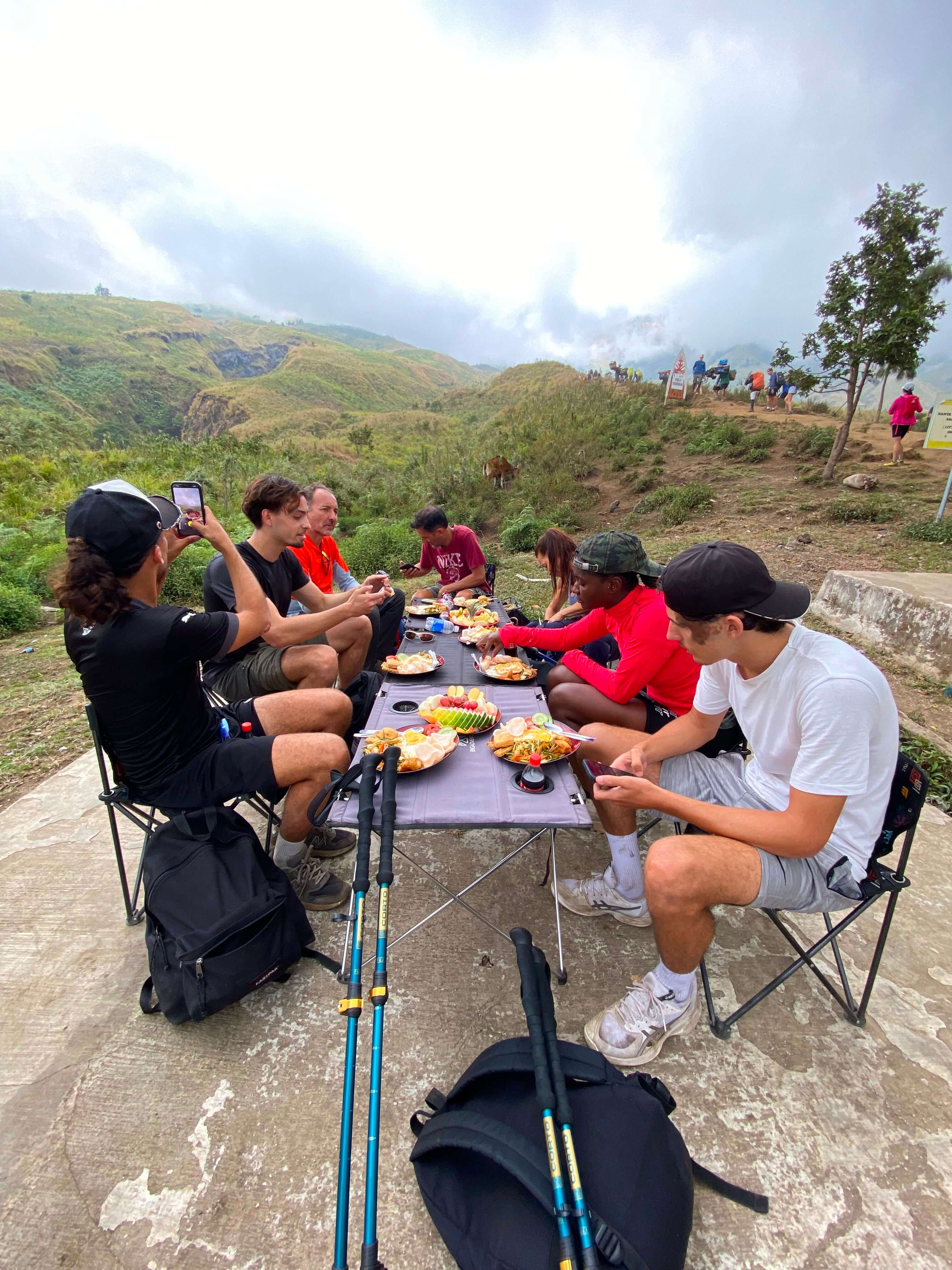
How hard is Mount Rinjani?
Mount Rinjani (3,726 m) is the second highest volcano in Indonesia. It is not a technical climb — you don't need ropes or climbing experience — but it is long and steep. The hardest part is the summit push: about 3 hours in the dark on loose volcanic gravel, where you often slide back a little with every step. Most reasonably fit people make it with a steady pace and a good guide.
Getting fit before your trek
- Start 4–6 weeks before your trip if you can.
- Walk or hike 3–4 times a week, with some hills or stairs. Climbing stairs with a light backpack is excellent training.
- Add leg strength exercises such as squats and lunges.
- Do at least one long walk of 4–5 hours to get used to being on your feet all day.
Weather and best season
The trekking season is from April to October (dry season). July and August are the busiest months. Days on the trail are warm and sunny, but nights at the crater rim are cold, and the summit can be close to 0 °C with strong wind before sunrise. The park usually closes during the rainy season (around January to March) for safety — always check with us before planning.
What to pack
Our porters carry the tents, sleeping bags, mattresses, food and water. You only carry a small daypack with your personal things:
- Trekking shoes with good grip (already worn in — not brand new)
- Warm layers: fleece or down jacket, gloves, beanie, and a windproof/rain jacket
- Headlamp with spare batteries (essential for the summit)
- Daypack 20–30 L with rain cover
- Trekking poles — very helpful on the summit and descent
- Sunscreen, sunglasses and a hat
- Personal medicine, blister plasters and a small first-aid kit
- Gaiters or long socks to keep sand and gravel out of your shoes
- Swimwear and a small towel for the hot springs (3D2N and 4D3N)
- Wet wipes, toilet paper and a small bag for your rubbish
- Power bank, a copy of your passport, and some cash for tips
Food and water
We provide three meals a day, snacks, fresh fruit, tea, coffee and drinking water. Tell us before your trek if you are vegetarian, vegan or have any food allergy and our cook will prepare suitable meals.
Altitude
Most trekkers feel fine on Rinjani, but some get a headache or feel tired near the summit. Walk slowly, drink plenty of water, and always tell your guide if you feel unwell — turning back is always the right choice if you feel bad.
Which package is right for you?
- 2D1N Summit — short on time and fit: summit and back in one night.
- 3D2N Summit & Lake — our most recommended trip: summit, lake and hot springs.
- 4D3N Complete — the same crossing at a relaxed pace with an extra night.
Questions? We usually reply within minutes.
Chat on WhatsApp